


Snakebite poisoning, known as snake envenomation, is a serious medical emergency that occurs when a venomous snake injects toxins into the body through a bite. While many snake encounters are harmless, venomous bites can cause severe tissue damage, organ failure, paralysis, and even death if not treated promptly.
Each year, thousands of people worldwide experience snakebites, with the majority surviving due to rapid medical treatment and access to antivenom. In the United States, venomous snakebites are relatively rare compared to global figures, but they still require immediate attention. Understanding the symptoms, knowing what first aid steps to take, and recognizing what not to do can significantly improve outcomes.
Quick action saves lives. This guide explains how snake venom affects the body, what symptoms to watch for, and how to respond effectively in an emergency.
What Is Snakebite Poisoning?
Snakebite poisoning occurs when a venomous snake injects venom through its fangs during a bite. Venom is a toxic substance designed to immobilize prey and begin digestion, but in humans, it can disrupt vital systems in the body.
It’s important to understand that:
- Not all snakes are venomous.
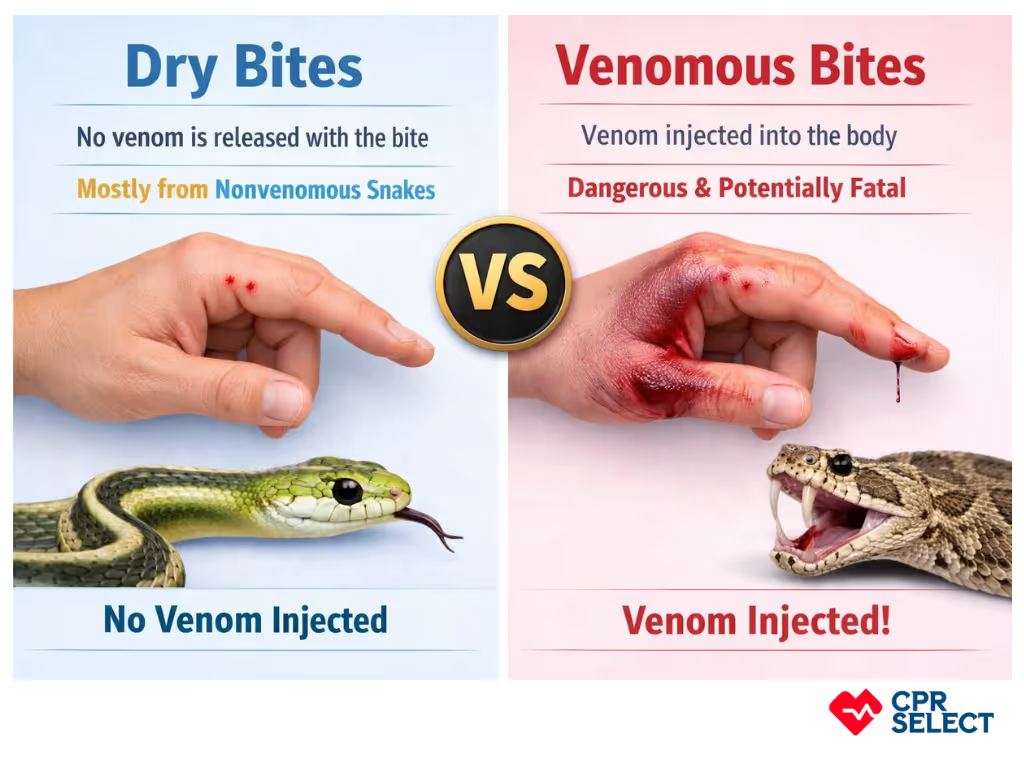
- Not all venomous bites inject venom (these are called dry bites).
- Even a small amount of venom can cause significant symptoms.
Envenomation severity depends on several factors, including the snake species, the amount of venom injected, the bite location, and the victim’s age and health.
What are the Types of Venom and How They Affect the Body?
Snake venom affects the body in different ways depending on its composition. Some snakes have venom that targets one system primarily, while others contain a mixture of toxins.
1. Hemotoxic Venom
Hemotoxic venom damages blood vessels and interferes with clotting. It can cause:
- Severe swelling
- Bruising and tissue damage
- Internal bleeding
- Drop in blood pressure
This type of venom is commonly found in pit vipers such as rattlesnakes and copperheads.
2. Neurotoxic Venom
Neurotoxic venom attacks the nervous system. It disrupts communication between nerves and muscles, potentially leading to:
- Drooping eyelids
- Slurred speech
- Muscle weakness
- Paralysis
- Breathing difficulty
If untreated, neurotoxic venom can lead to respiratory failure.
3. Cytotoxic Venom
Cytotoxic venom destroys cells and surrounding tissues. It may cause:
- Severe pain at the bite site
- Blistering
- Tissue necrosis (cell death)
- Long-term scarring
Prompt treatment is critical to minimize permanent damage.
4. Myotoxic Venom
Myotoxic venom breaks down muscle tissue. This can lead to:
- Muscle pain
- Weakness
- Kidney damage due to muscle protein release
Severe cases may require hospitalization and monitoring of kidney function.
What are the Common Venomous Snakes?
In the United States, most venomous snakebites are caused by pit vipers and coral snakes. Pit vipers include rattlesnakes, copperheads, and cottonmouths (also known as water moccasins). Rattlesnakes are the most common source of serious venomous bites and are widely distributed, particularly in the Southwest. Copperheads are responsible for many bites in the eastern and central regions, and although their venom is generally less potent, medical evaluation is still necessary. Cottonmouths are typically found in the southeastern U.S., especially near water. Coral snakes are less commonly encountered but possess powerful neurotoxic venom that can lead to dangerous respiratory complications. Regardless of the species involved, any suspected venomous snakebite should be treated as a medical emergency.
.avif)
.avif)


