


HIPAA Certification for Employer Group Health Plan
As an employer, it is imperative to comply with the Health Insurance Portability and Accountability Act (HIPAA) regulations when dealing with employee health information. HIPAA certification for employer group health plans provides essential knowledge about this federal law and how it affects the management of employee health information.
HIPAA certification courses are designed to help employers understand their responsibilities under HIPAA, including safeguarding employee health information, ensuring the privacy and security of patient's electronic health records, risk analysis, and providing employees with access to their health information. This course helps your organization work toward HIPAA compliance by training staff on Privacy, Security, and Breach Notification requirements. Completion of training alone does not guarantee compliance.
After successful completion of your online HIPAA Course and passing the multiple-choice certification exam, instantly print your certificate of completion. We will send you a FREE completion card or wallet card via first-class mail in 2 days!


Just login, pass the exam and download your digital provider card. Come back next year and repeat the process for your recertification at no additional cost.
This can save you up to $1500 over the course of your career.
Learn More...

What are the HIPAA regulations for Employer Group Health Plan?
- The Privacy Rule's should be the highest priority in any HIPAA training for employer group health plans. Most employer group health plans are covered by HIPAA. However, a plan with fewer than 50 participants that is self-administered by the employer is not subject to HIPAA
- The Security Rule ensures the confidentiality, integrity, and availability of ePHI. This rule should be given equal importance as the Privacy Rule.
- HIPAA Breach Notification Rule should also be a significant focus of any HIPAA training program for employer group health plans. If a breach affects more than 500 residents of a state or jurisdiction, the plan must notify prominent media outlets in addition to notifying individuals and HHS.
- HIPAA requires workforce training on privacy and security awareness. There is no official HIPAA certification, but this course provides a certificate of completion that can serve as evidence of training.
- HIPAA training programs should include information on the potential consequences of non-compliance, such as fines, penalties, and reputational damage.
- Training programs should cover the Omnibus Rule's requirements and their impact on employer group health plans.

What is HIPAA Compliance Certification?

Employer Group Health Plans are governed by HIPAA regulations, which require employers to protect their employees' health information and ensure their privacy. Employers must provide employees access to their health information and maintain appropriate security measures for electronic health records.
1. HIPAA awareness training ensures employers comply with HIPAA regulations when managing employee health information. This compliance helps to protect employees' privacy and security policies while maintaining appropriate access to their health information.
2. By undergoing HIPAA awareness training, employers avoid costly penalties for non-compliance with HIPAA regulations. Additionally, the course helps employers identify potential risks and vulnerabilities in their current company policies and procedures related to employee health information. This knowledge is used to implement stronger security measures and improve compliance with HIPAA regulations.
3. Completing the HIPAA certification course enhances the reputation of an employer group health plan. By demonstrating a commitment to protecting employee health information and complying with HIPAA regulations, employers build trust with their employees and improve overall satisfaction with the health plan.

- Introduction to HIPAA: The HIPAA compliance program introduces the Health Insurance Portability and Accountability Act (HIPAA) regulations, including the purpose and scope of the law, the different rules and requirements, and the potential penalties for non-compliance.
- HIPAA for Employer Group Health Plan: This section focuses on the HIPAA regulations that apply to employer group health plans. It explains how employers must protect their employees' health information under HIPAA regulations.
- Using and Disclosing PHI: This section covers the proper use and disclosure of protected health information (PHI) under HIPAA, including the circumstances under which PHI is shared and the requirements for obtaining patient authorization.
- HIPAA Privacy Rule: This section focuses specifically on the HIPAA Privacy Rule, which sets standards for how covered entities must protect patient privacy and confidentiality, including requirements for obtaining patient consent and providing individuals with access to their own health information.
- HIPAA Security Rule: This section covers the HIPAA Security Rule, which sets standards for the safeguarding of electronic protected health information (ePHI), including requirements for administrative, physical, and technical safeguards to protect against unauthorized access and use.
- Security Requirements: This section covers the various security requirements that must be implemented to ensure compliance with the HIPAA Security Rule, including risk assessments, encryption, and employee training requirements to avoid cyber attacks and identity theft.
- Understanding the HIPAA Breach: This section covers the requirements for reporting and responding to a HIPAA breach, including the definition of a breach, the requirements for notification, and the potential penalties for non-compliance.
- HIPAA Enforcement Rule: This section covers the HIPAA Enforcement Rule, which establishes procedures for investigating and enforcing HIPAA regulations, including the potential penalties and fines for non-compliance.
- Hitech Act and Omnibus Rule: This section covers the HITECH Act and Omnibus Rule, which expanded the scope of HIPAA regulations to include business associates and established additional requirements for privacy and security.
- HIPAA Audits and Penalties: This section covers the HIPAA audit program, including the types of audits conducted and the potential penalties for non-compliance, including fines and corrective action plans.
- HIPAA and State Laws: This section covers the interaction between HIPAA regulations and state laws, including the preemption of state laws by HIPAA and the potential for states to implement additional privacy and security requirements.
- Emergency Scenarios: This section covers the requirements for compliance with HIPAA regulations in emergency situations, including natural disasters and public health emergencies.
- HIPAA Resources and Best Practices: This section provides resources and best practices for ensuring compliance with HIPAA regulations, including tools for risk assessments, training resources, and sample privacy policies and procedures.


HIPAA Certification Test Format
The HIPAA Certification test format involves an online written examination of 25 multiple-choice questions about protecting the Health Insurance Portability and Accountability Act. There is no time limit, and a minimum score of 70% is required to pass. Studying the course material is crucial to passing the online HIPAA certification exam.
HIPAA Certificate
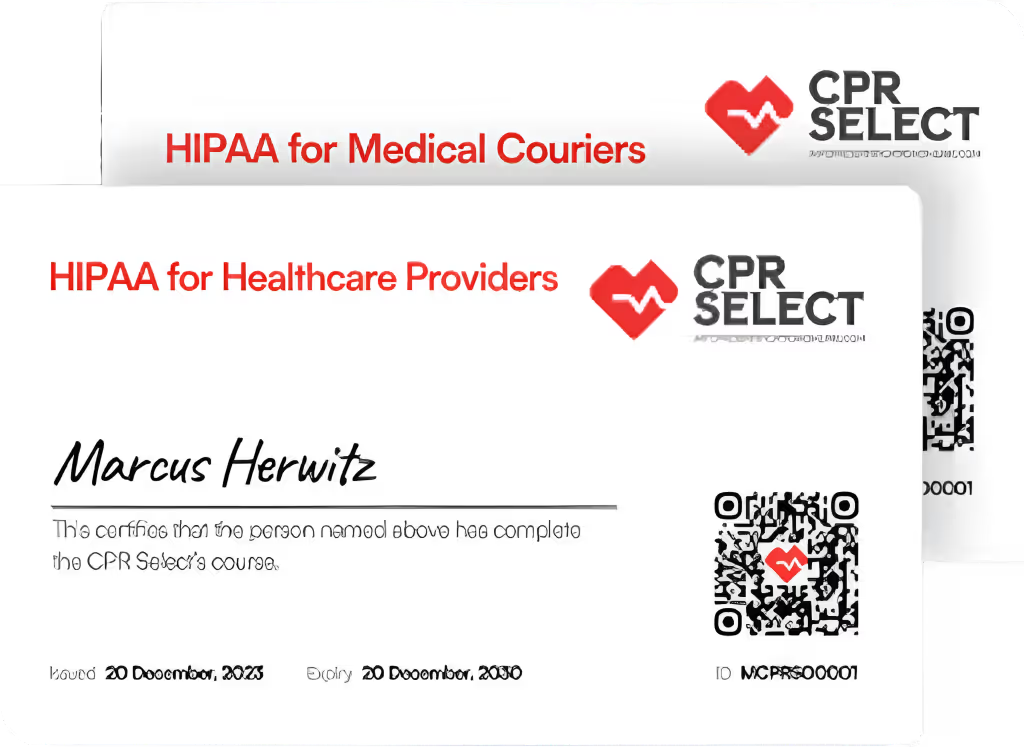
Upon passing the HIPAA certification exam, you will receive a HIPAA certificate of completion. The individual training certificate includes information such as the certificate holder's name, the certification issuer, the certification date, the certification number, and the expiration date. The HIPAA certificate is the official documentation of the individual or organization's successful completion of the certification requirements, demonstrating their knowledge and compliance with HIPAA regulations.
What are the HIPAA Privacy Notice requirements for employers that sponsor a group health plan?
Employers that sponsor a group health plan must provide a HIPAA Notice of Privacy Practices (NPP) to all plan participants. This notice must explain how the plan uses and protects PHI, individual rights regarding PHI, permitted disclosures, and how to file complaints. The notice must be provided at enrollment, upon request, and redistributed at least every three years. It must be written in plain language and provided at enrollment, upon request, and periodically according to HIPAA rules.
What are the obligations of a plan sponsor under HIPAA?
A plan sponsor must protect the privacy and security of PHI accessed for plan administration. This includes implementing administrative safeguards, limiting who may access PHI, ensuring PHI is used only for plan-related functions, signing plan amendments acknowledging HIPAA responsibilities, and ensuring any workforce member with access to PHI receives HIPAA training.
What is the cost of the HIPAA Certification for Employer Group Health Plan?
At CPR Select, we offer a HIPAA Certification Course for as low as $24.95. The cost of training includes lifetime access to the course materials and unlimited practice tests. If you did not pass the final exam for the HIPAA Certification Course, you are allowed to retake the exam without having to pay for the training again.
Is there free HIPAA training with a certificate?
No. Obtaining a HIPAA compliance certificate usually involves a fee. While free HIPAA training resources are available online for employees, courses that provide a formal HIPAA certification upon completion typically require payment. Always check the specific details of the course to confirm whether it includes certification and if there are associated costs.
How long does HIPAA certification last?
Your HIPAA certification remains effective for a full year following your completion date. Taking refresher training after this period is essential to ensure ongoing compliance with evolving HIPAA regulations.
How to get HIPAA Certification Online
To obtain HIPAA certification online:
- Choose Your Course: Select the HIPAA certification course that fits your needs - whether you're a healthcare professional or a business associate.
- Convenient Online Learning: Access our user-friendly online platform and complete the course at your own pace from anywhere, anytime.
- Comprehensive Training: Learn the ins and outs of HIPAA regulations through interactive modules, videos, and practice tests.
- Pass the Exam: Successfully pass the certification exam with a 70% or higher score to receive your HIPAA certification.
- Get your HIPAA certificate: Upon successful completion, you will receive your HIPAA certification digitally and by mail.
What are the Benefits of HIPAA Certification Online?
Obtaining HIPAA certification online offers several benefits for employers:
- Convenience: Online HIPAA certification allows business associates to complete the training at their own pace and from any location with internet access, minimizing disruptions to their work schedules.
- Flexibility: Online courses benefits the staff with flexibility in scheduling, enabling business associates to balance their training with other work responsibilities and commitments.
- Cost-Effectiveness: Online HIPAA certification courses often have lower fees than in-person training options, reducing training expenses for business associates and their organizations.
- Comprehensive Training: Online courses cover all relevant aspects of HIPAA regulations, ensuring business associates thoroughly understand their legal obligations regarding protected health information (PHI).
- Immediate Access to Resources: Online courses typically provide immediate access to training materials, resources, and practice tests, allowing business associates to begin training and preparation promptly.
- Updated Content: Online HIPAA certification courses are often regularly updated to reflect changes in HIPAA regulations, ensuring that business associates receive the most current information and training.
Disclaimer: This training provides education and a certificate of completion but is not issued or endorsed by HHS/OCR. Compliance depends on the organization’s full implementation of HIPAA safeguards, policies, and procedures
Group HIPAA Training: Get Your Team Certified Online!
Frequently Asked Questions
HIPAA, or the Health Insurance Portability and Accountability Act, is a federal law enacted in 1996 that sets standards for protecting sensitive patient information in the healthcare industry. Its primary goal is to ensure the privacy and security of personal health information (PHI) while allowing for electronic exchange between healthcare providers, insurers, and other covered entities.
HIPAA compliance is mandatory for all business associates and healthcare organizations. Failure to comply results in severe penalties and sanctions. Therefore, business associates and healthcare providers must undergo HIPAA certification courses to understand the requirements of the law and ensure that they comply with HIPAA regulations.
HIPAA was enacted in 1996, but compliance deadlines occurred later. The Privacy Rule became enforceable in 2003, the Security Rule in 2005, and the Breach Notification Rule in 2009. Employer group health plans have been required to comply with these rules since their respective enforcement dates.
HIPAA does not cover information that is not considered Protected Health Information (PHI). This includes employment records held by an employer, education records protected by FERPA, de-identified health data, and health information that cannot be linked to an individual. HIPAA also does not apply to organizations that do not transmit, create, or use PHI in any form.
Entities that do not provide healthcare services, do not bill electronically, and do not process PHI are exempt from HIPAA. Examples include employers in their role as employers, life insurance companies, workers’ compensation carriers, automobile insurance companies, gyms, schools, and employers that never access PHI in their group health plan operations.
Yes. HIPAA training helps employers, HR staff, plan administrators, and anyone who handles PHI understand privacy and security requirements. It reduces compliance risks, supports secure handling of employee health information, and helps organizations avoid costly violations. Employers often require formal HIPAA training as part of their compliance program.
The type of HIPAA course you must take will depend on your role and responsibilities within a covered entity or business associate. If you are a healthcare provider or employee handling protected health information (PHI), you must take a course covering the HIPAA Privacy Rule and Security Rule. If you are a business associate or vendor who works with covered entities, you must take a course covering your specific obligations under HIPAA regulations. You should consult with your employer or HIPAA compliance officer to determine the type of HIPAA course you need.
A group health plan generally covers eligible employees, their spouses, dependent children, and in some cases domestic partners or retirees, depending on the employer’s plan design and eligibility rules. Coverage is defined by the employer’s plan documents and federal regulations.
Protected Health Information (PHI) refers to any individually identifiable health information that is created, received, maintained, or transmitted by a covered entity or business associate. This includes information such as a patient's medical history, diagnoses, medications, and test results.
It is essential to safeguard PHI because it contains sensitive personal information that could be used to harm an individual if it falls into the wrong hands.
If a breach of unsecured PHI occurs, the plan must notify affected individuals without unreasonable delay, notify the Department of Health and Human Services, and if more than 500 individuals are affected, notify major media outlets. The notice must explain what happened, what information was involved, steps individuals should take, and measures the plan is taking to prevent further breaches.
The purpose of the HIPAA Certification training for Employer Group Health Plan is to educate employees and employers about HIPAA regulations and ensure compliance with these regulations. The course covers various topics, such as security requirements, breach reporting and response, enforcement rules, HITECH Act and Omnibus Rule, audits and penalties, state laws, emergency scenarios, resources, and best practices.
The best practices for safeguarding protected health information (PHI) include encryption for data protection, strict access controls to limit PHI access, regular employee training on HIPAA regulations, physical security measures like locking file cabinets, regular data backups, use of secure communication channels, and maintaining audit trails to track access. These practices are implemented through robust policies, staff training, and safe technologies in healthcare settings. Similar measures should be adopted in business settings to secure electronic devices, networks, and communication channels. Regular audits and assessments help identify and address potential vulnerabilities in healthcare and business settings.
Yes. If you need to train multiple employees, purchasing a group package or organizational training is recommended. Contact the training providers to discuss customized training options. Group packages typically offer discounted rates and allow you to manage and track your employees' progress through a centralized platform.
HIPAA certification courses are not directly certified by the government. However, the Department of Health and Human Services (HHS) requires covered entities and business associates to provide training on HIPAA regulations to their workforce. The HHS has guided what should be covered in HIPAA training.
To ensure that you receive proper training, it is recommended that you choose a course from a reputable provider that covers all necessary topics and is regularly updated to reflect any changes in HIPAA regulations. CPR Select's HIPAA Certification Course is designed to meet these requirements and provide comprehensive training on HIPAA regulations.
Yes, the HIPAA Certification Course is valid in all states. HIPAA regulations are federal laws that apply to covered entities and business associates across the United States. Therefore, any training course that covers the required topics and meets the standards set by the Department of Health and Human Services (HHS) fulfills HIPAA training requirements in any state.
Yes, you can obtain certification in both HIPAA and Bloodborne Pathogens. These are separate certifications that address different aspects of healthcare industry compliance. CPR Select offers individual courses for HIPAA and Bloodborne Pathogens.
No. While some free HIPAA training resources are available online, courses that provide a formal certification upon completion typically require payment. Some healthcare organizations or employers offer free HIPAA compliance training to their employees as part of their compliance efforts. However, it's essential to verify whether the free training includes certification and if it meets the specific requirements of your workplace or industry.
Latest Trusted Reviews
1
0
0
0
0

.svg)
.svg)
.svg)
