

Basic Life Support (BLS) is a set of lifesaving skills used to respond to cardiac arrest, respiratory emergencies, and other life-threatening situations. BLS includes recognizing an emergency, starting high-quality cardiopulmonary resuscitation (CPR), using an automated external defibrillator (AED), providing appropriate breaths and ventilation, and responding to airway emergencies.
BLS is especially important for healthcare professionals, trained first responders, and people who may be responsible for responding to medical emergencies.
What Is Basic Life Support (BLS)?
Basic Life Support, commonly called BLS, focuses on the immediate response to life-threatening emergencies. It is used when a person experiences cardiac arrest, respiratory arrest, or another emergency that requires immediate intervention.
BLS emphasizes early recognition, activation of emergency response, high-quality CPR, and rapid use of an AED when appropriate. It also includes techniques for providing breaths and managing certain airway emergencies.
BLS may be performed by trained healthcare professionals as well as other trained responders, depending on the situation and level of training.
Key Components of Basic Life Support
- Recognition of the Emergency: BLS begins with the recognition of an emergency situation. This involves assessing the victim's responsiveness and quickly determining the need for assistance.
- Activation of Emergency Services: Activate emergency medical services using your local emergency number (for example, 911 in the U.S.). If you are alone with a child or infant, follow pediatric BLS guidance on when to leave the victim to activate EMS and retrieve an AED.
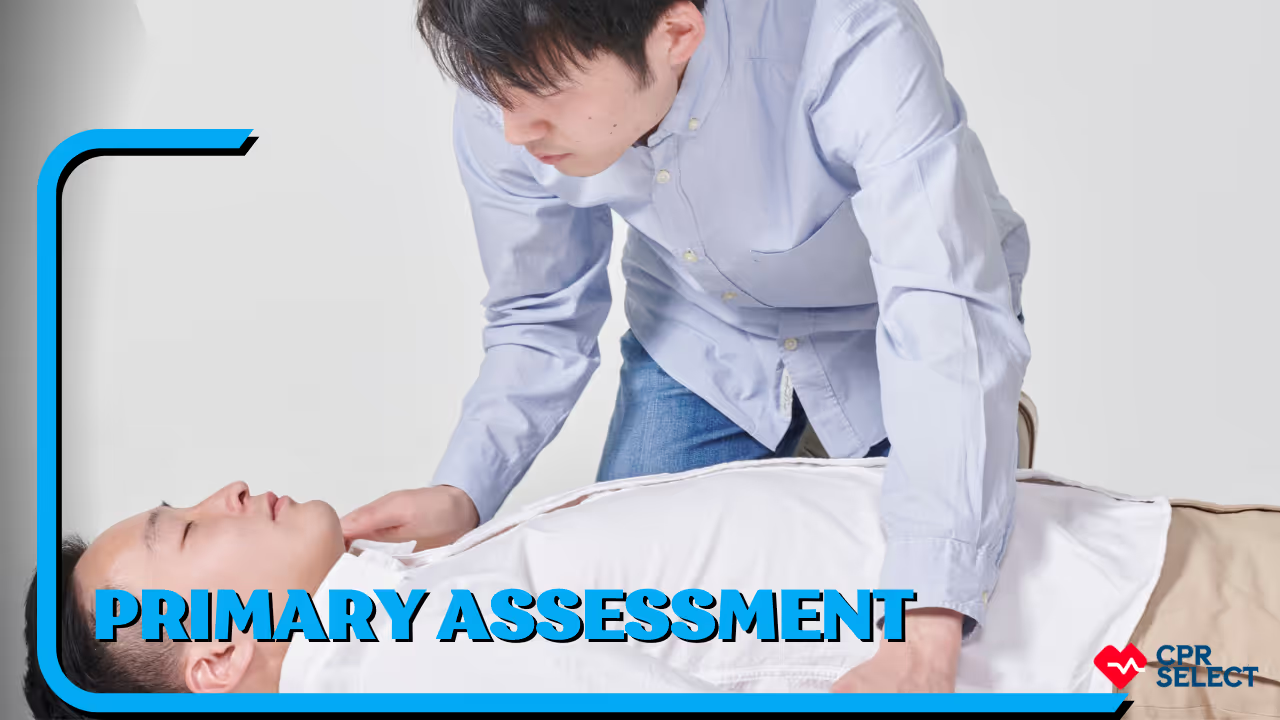
- Assessment of Breathing and Pulse: The responder should assess the victim's breathing and pulse. If the victim is not breathing normally and has no pulse, CPR (Cardiopulmonary Resuscitation) should be initiated immediately.
- Chest Compressions: High-quality chest compressions are a cornerstone of BLS. Rescuers should perform chest compressions at a rate of 100–120 compressions per minute, allowing full chest recoil between compressions.
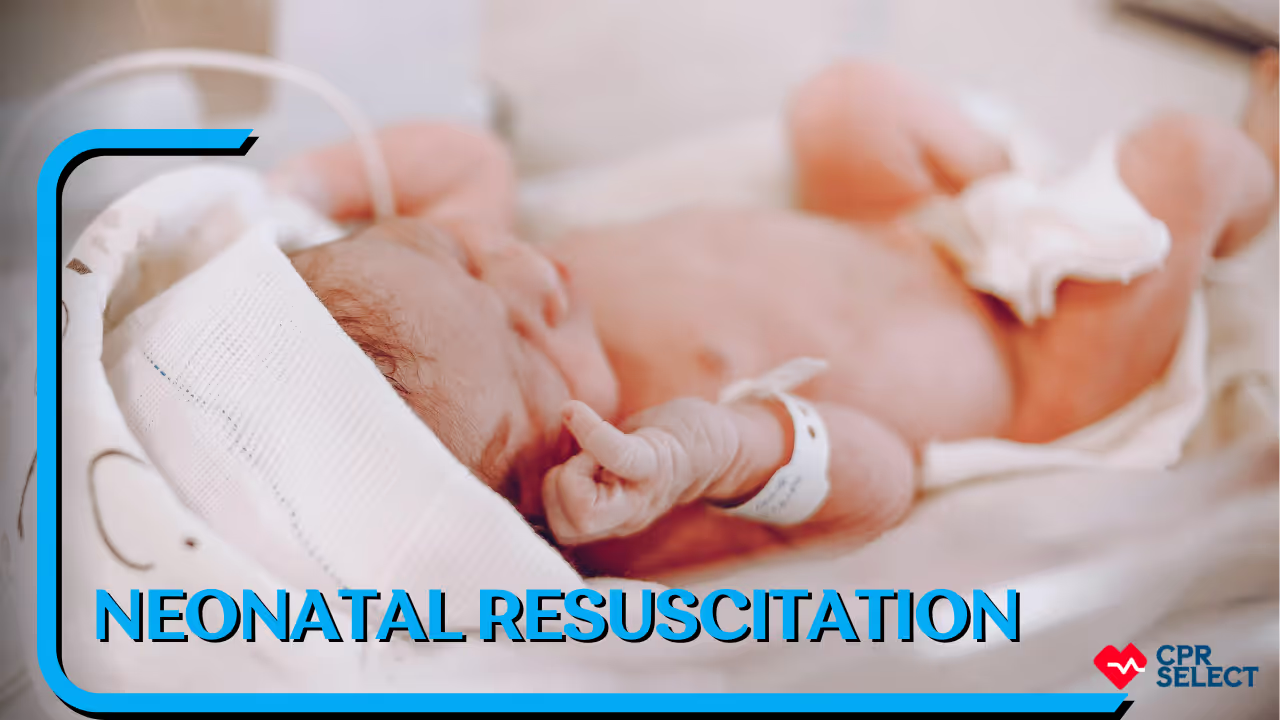
- Rescue Breaths: In some cases, rescue breaths are administered along with chest compressions to provide oxygen to the victim's lungs, especially in cases of drowning or respiratory arrest. The ratio of compressions to breaths vary depending on guidelines. For adults, perform 30 compressions followed by 2 breaths (30:2). For children and infants, use 30:2 with one rescuer and 15:2 with two rescuers.
- Use of Automated External Defibrillator (AED): Use an AED as soon as it becomes available for a person who is unresponsive and not breathing normally, and follow the device’s voice prompts.
- Choking Relief: BLS includes techniques for relieving choking, such as the Heimlich maneuver, to dislodge foreign objects obstructing the airway.
- Positioning and Safety: Ensuring safety for both the victim and the rescuer is crucial. Proper victim positioning, wearing personal protective equipment (if available), and assessing the environment for potential hazards are important considerations.
- Continuous Monitoring and Adjustment: Rescuers should continuously monitor the victim's condition, reassess responsiveness, pulse, and breathing, and make adjustments to the care provided as needed.
- Effective Communication: Clear and effective communication with emergency services, other responders, or bystanders is vital for coordinating assistance, relaying important information, and ensuring a coordinated response.
Is clutching the throat a universal sign of choking?
Yes, clutching the throat is universally recognized as a sign of choking. It is an instinctive gesture people make when they are struggling to breathe due to an obstruction in their airway, often caused by food or a foreign object.
Does BVM ventilation become more effective when performed by two rescuers?
Indeed, Bag-Valve-Mask (BVM) ventilation is significantly more effective when operated by two rescuers. With two individuals, one maintain a proper mask seal over the victim's face, while the other delivers consistent and effective ventilations. This coordinated effort ensures the victim receives adequate oxygenation, crucial for their survival.
What are the components of a scene size-up in a BLS scenario?
During a BLS scenario, a scene size-up involves assessing potential hazards, determining the number of victims, and ensuring personal safety. However, checking for responsiveness, a critical step, is not included in the scene size-up process. Responsiveness is checked immediately after ensuring personal safety, guiding subsequent actions.
What steps should be taken if a victim has a seizure in water?
If a victim experiences a seizure in water, the responder should carefully support the victim's head above water to prevent drowning. It's essential to keep the victim calm, ensuring their safety while waiting for the seizure to end. Once the seizure concludes, monitor the victim's condition closely and provide appropriate medical assistance if needed.
How does a responder's role change when multiple rescuers are available for BLS?
In scenarios with multiple rescuers, roles are divided for optimal efficiency. One rescuer focus on providing ventilation, ensuring proper air exchange, while another performs chest compressions. This division of tasks significantly improves the overall quality of BLS, increasing the victim's chances of survival.
How does the rate of ventilation differ between adults and 5-year-olds?
For adults, ventilations are administered at a rate of one breath every 5-6 seconds. In contrast, for 5-year-olds, ventilations should be given approximately every 3 seconds. This adjustment accounts for the smaller lung capacity of children and ensures they receive an adequate oxygen supply during the resuscitation process.
What is meant by "respiratory distress"?
Respiratory distress refers to a condition where the victim experiences difficulty breathing. This manifest as rapid or labored breathing, wheezing, or gasping for breath. Victims in respiratory distress urgently need assistance to ensure proper oxygen intake, making it crucial for responders to act swiftly and effectively.
What does "primary assessment" encompass in BLS?
In BLS, the primary assessment is a rapid yet thorough evaluation of the victim's condition. It involves checking for responsiveness, assessing the airway for any obstructions, monitoring breathing, and evaluating circulation (pulse). This systematic approach allows rescuers to identify life-threatening issues promptly and initiate appropriate interventions, potentially saving the victim's life.
BLS Training and Certification
Individuals who are called upon to administer BLS, such as healthcare professionals, first aid responders, and lifeguards, typically undergo formal training and certification programs. This course follows current Basic Life Support (BLS) guidelines based on recognized CPR and emergency cardiovascular care standards.
Importance of BLS Training
BLS is crucial because it means the difference between life and death during a medical emergency. Rapid and effective administration of BLS techniques help maintain vital functions, such as oxygenation and circulation, until more advanced medical care is available. BLS empowers individuals to take immediate action, improving the chances of survival and reducing the risk of long-term complications for the victim. It is a valuable skill that save lives in various emergency situations.
Enhancing Life-Saving Skills
BLS training continually refines and improves the life-saving skills of participants. Through practice, feedback, and ongoing education, trainees continuously enhance their abilities in CPR, first aid, and other critical interventions. Furthermore, the training underscores the importance of maintaining proficiency and staying updated with the latest evidence-based practices, ensuring that trainees are well-prepared to deliver high-quality care during emergencies.
Elevating the Standard of Care
BLS training plays a pivotal role in raising the standard of care provided during emergencies. It guarantees that patients receive prompt and appropriate care in critical situations by equipping individuals with comprehensive skills, knowledge, and confidence. Additionally, the training underscores the importance of delivering high-quality care while prioritizing patient safety and positive outcomes.
Increasing Survival Rates
BLS training has the potential to significantly raise survival rates for people facing life-threatening emergencies. By furnishing trainees with effective response skills and knowledge, BLS training enhances the odds of survival for individuals in critical situations. Additionally, it equips individuals to promptly and correctly execute life-saving interventions, thus improving overall outcomes.
Cultivating Emergency Preparedness
One of the primary objectives of BLS training is to nurture a sense of emergency readiness among participants. It imparts the essential skills, knowledge, and self-assurance required to react adeptly in diverse emergency scenarios. Trainees learn how to evaluate emergencies, prioritize interventions, and efficiently manage available resources. This comprehensive training prepares individuals to act swiftly and effectively during critical incidents.
Promoting Teamwork in Emergencies
BLS training places a strong emphasis on teamwork and cooperation during emergency situations. Trainees acquire the skills needed to communicate effectively, coordinate efforts, and offer support to one another when dealing with emergencies. Through simulations and practical exercises, individuals develop the ability to work seamlessly as part of a team, which optimizes patient care and outcomes.
Who Needs BLS Training?
BLS is commonly associated with healthcare professionals and trained first responders. Healthcare organizations and employers may have their own requirements for BLS training or certification. People who need BLS training include:
- Nurses
- Doctors and physicians
- EMTs and paramedics
- Dentists and dental professionals
- Medical assistants
- Respiratory therapists
- Pharmacists
- Healthcare students
- Clinical staff
- Other healthcare providers
- Trained first responders
The specific training or certification required can vary by employer, healthcare facility, profession, licensing organization, and location.
BLS for Nurses
Nurses may encounter patients experiencing cardiac arrest, respiratory emergencies, or other life-threatening conditions. BLS training helps nurses understand the immediate response to these emergencies, including CPR, AED use, ventilation, and team-based resuscitation.
BLS for Doctors
Doctors may also be required by their workplace or professional organization to maintain current BLS training or certification. BLS provides foundational skills that can be used during an emergency while additional advanced interventions may be provided by trained professionals.
BLS for Healthcare Providers
BLS for healthcare providers generally focuses on recognizing cardiac arrest and other life-threatening emergencies, performing high-quality CPR, providing appropriate ventilation, and using an AED as soon as possible when indicated. Current BLS training may also cover pediatric patients, airway emergencies, and team-based resuscitation.
Disclaimer: This course is not affiliated with, sponsored by, or endorsed by the American Heart Association. Acceptance depends on employer, licensing body, or regulatory requirements. Some healthcare employers require American Heart Association (AHA) or American Red Cross (ARC) certification with hands-on skills testing.
Learn More About Basic Life Support:
BLS is an important part of emergency preparedness for healthcare professionals and other trained responders. Understanding CPR, AED use, ventilation, emergency recognition, and the BLS response sequence can help learners build a foundation for responding to life-threatening emergencies.
Explore our BLS resources to learn more about Basic Life Support skills, CPR, AED use, BLS algorithms, and emergency response.


.avif)
.webp)


.svg)
.svg)
.svg)
